PHROM PHILLY, WITH LOVE!

Subscribe below -

Gimme your email address and i'll send you presents..

Tuesday, 24 September 2013

REVIEW - WHITE HOUSE DOWN

Director Roland Emmerich has a taste for destroying American monuments. Working chronologically: in Independence Day he blows up the White House, Godzilla sees the destruction of Madison Square Garden and the Brooklyn Bridge, The Day After Tomorrow collapses the Statue of Liberty and the Chrysler building, whilst 2012 sees the Washington Monument falling to the tune of what can only be described as disturbed whale noises.
DFR_04270_R
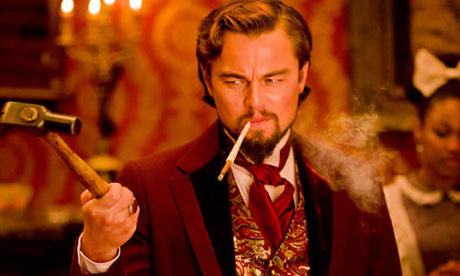
president django
Disaster movies are his thing, and disasters that threaten and destroy symbols of America are his speciality. White House Down is no different as Emmerich returns to threatening the most recognisable “home” on the planet: 1600 Pennsylvania Avenue. John Cale (Channing Tatum) is a Capitol policeman who has been forgoing his marital and paternal duties for the sake of serving his country. His marriage has long since ended and his 11 year old daughter, Emily (Joey King), hates him. She does, however, have one man in her life she is obsessed with: President Sawyer (Jamie Foxx). In a superb and realistic show of American heroism Cale decides that if he cannot be her hero, he will have to protect the one she has. Aw.
DFR_01435_R2
Cale interviews for a job in the Secret Service, but fails the first interview. After being denied the opportunity, he takes Emily on a tour of the White House when the complex is overtaken by a heavily armed paramilitary group. In a spectacular turn of luck (?) Cale is thrust into the role he wanted and must protect the president, his daughter, and his country – all without pay.
DFR_08332_R
knifing a dangerous looking wall
The atmosphere and tone of the film is strongly reminiscent of Independence Day, and it is easy to see Emmerich evoking some of the same themes and devices* he used so well in the 1996 blockbuster. In fact, a White House tour guide is kind enough to remind us of the area of the building that was destroyed in said film. And the buddy concept, although no “Smith and Goldblum”, works extremely well and is probably the strongest aspect of the film. Tatum and Foxx have a great back and forth and some excellent scripting allows viewers to indulge in some laugh out loud moments.
DFR_04121_R
bros bros bros bros
The film, at points, looks as though it is about to stray into a critique of the Obama administration. However, after briefly flirting with some poignant analysis of issues with the government’s division of power and second term re-election, the film shelves these deeper points in favour of some more blowing up of the White House. As we’ve seen in previous Emmerich films, the man loves a flair for the dramatic. No more so than in his endings, and audiences will not be let down in that regard. What they may find themselves let down by, however, is the lack of any real substance behind the action edits and clichéd narrative structure. It’s enjoyable to laugh with (and at), but sadly it has nothing on Independence Day.
26/50 STATES

Tuesday, 6 August 2013

REVIEW - ONLY GOD FORGIVES

"Wanna fight?" is the enduring message of Nicholas Winding Reft's 2013 reunion with Ryan Gosling. Gosling stars as Julian, a US ex-pat running a boxing gym (front for a drug operation) in the seedy underworld of Bangkok. His brother, Billy, is a sadomasochistic bastard who decides one night to rape and murder an underage prostitute before surrendering to Thai police. Unfortunately for Billy, the reporting police officer is Lieutenant Chang - who goes by the cheery title: "Angel of Death".

"In the blue corner!"

Chang offers the father of the dead prostitute a chance for vengeance, leaving him alone with Billy to do as he pleases. If the father can forgive Billy for brutally raping and murdering his beloved daughter then the film would be done. However, some things are easier said than done, and man's opposing forceds of vengeance and forgiveness are very rarely in sync. Vengeance rules and the father beats Billy to death before losing his own arm to Change for his weakness. Enter the mother figure. Clearly distraught over her son's death, Crystal flies out to bangkok and demands Julian avenge his brother. Sadly, it's not that simple to kill an angel. Particularly the "Angel of Death".

"In the red corner!"

Drive was infamous for its stunning soundtrack, however Refn has rightly traded the electro-pop score for a more ethereal cacophony of wind pipes and tribal drums. Most of the actual music in the film comes from interspersed sequences - strange, yet incredibly fitting - of Chang performing a somewhat menacing karaoke set to his fellow law enforcement officers. The lighting in the film is also extremely expressive - bright neons and shady black lights fill each frame almost exclusively with reds and blues. No surprise here to find the boxing motif of two opposing forces continued in traditional "corner" colours. Colour, alongside music, place the film in a hyperreal Bangkok - beyond the traditions and morals of the everyday world.

sadly, no, he doesn't sing Vindaloo. 

The film is, most obviously, a tale of vengeance/forgiveness with a dash of an Oedipal metaphor thrown in there. Not to discount its intention or deliberation, the metaphor is plain to see. Crystal, at a sit down meal with Julian and his prostitute girlfriend, frequently laments that Julian's penis is just not quite in the same league as his dearly departed brother's. Crystal goes on to imply a sexual relationship between herself and Billy, and the metaphor is completed when she claims Julian murdered his father under her wishes. After a lovely dinner, Julian's lady friend challenges why he lets his mother treat him like that, to which he explodes in a fit of outrage. Julian desires nothing more than his mother's acceptance (particularly after she admits she tried to abort him), and in Crystal's final scene he finally gets what he wants...kinda.

oedipus scmedipus

Every single frame of Only God Forgives is exquisitely composed. There are frames within frames that even Kubrick himself wouldn't have thought of. Although at a mere 87 minutes, the film may seem a touch superficial to the untrained eye, with a little bit of hindsight and a few hours to digest the yummy mummy metaphors, the film takes on a reverence much stronger than Drive. It's definitely a psychoanalysts wet dream, and it may just be Refn's best film yet.

44/50 STATES
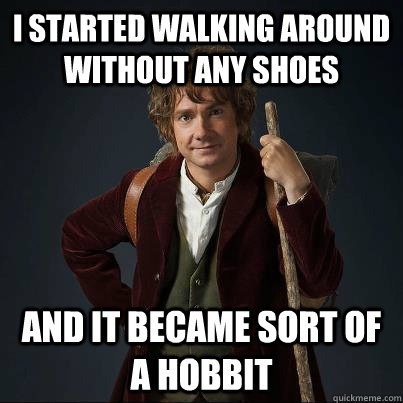
Tuesday, 16 July 2013

REVIEW - WORLD WAR Z

Zombies are experiencing quite a resurgence the past few years. You might even say they're rising from the dead (sorry). Since the turn of the century all media has been obsessed with Zombies; from films, across Television (The Walking Dead has been awesome) to video games (The Last of Us being the most recent success). For the first time in a while, Zombies are bankable. And it is for precisely this reason there's been a buzz about World War Z for quite some time. 

Undersells the movie a touch

Another more pressing concern of cinema-goers has been surrounding the issue of fidelity. World War Z claims inspiration from a novel of the same name, written by Max Brooks. Although I haven't read it myself (Game of Thrones has taken over my life), the above info graphic and various recommendations from friends consistently inform me of its excellence. And so onto the burning issue: how close does the film follow the novel? Lemme throw one back at ya: does it matter? 

Isn't necessarily a bad thing

 Adapting anything on to the big screen has been a contentious issue for decades, and adaptation theory is a complex and interesting area of film studies. Since the idea of transcribing a book into a film is impossible, surely holding up a final goal of "accuracy" is absurd. The film is a separate entity, and although it may borrow ideas/themes/narrative the producers don't sign a contract of loyalty. The issue of adaptation also tends to breed a particular type of cinema-goer I will term: "the arrogant book lover". We all know this person. We may have all been this person - I know I have. They will, despite probably liking the film, still pan it because a few scenes "WEREN'T LIKE THEY WERE IN THE BOOK", or "IF YOU READ THE BOOK YOU'D UNDERSTAND" , or simply: "THE BOOK IS JUST WAY BETTER".

NOOOOOOOOOOOO

All this talk is basically just an excuse to ignore talking about the book having not read it, and so onto the film! World War Z opens in Philadelphia (wooo, shoutout!), with Gerry Lane (Bradley Pitt) stuck in heavy traffic with his supposedly "British" wife and two kids. This is a fairly familiar trick/allegory with Zombie/apocalypse films; open the film in the "birthplace" of the USA just as things are about to get dead. Clever ay!? Here is the switch from politics to zombies. A few explosions & a car crash soon sends Gerry scrambling to get his family safe, as he does so he witnesses a frothing human biting an unsuspecting victim. The bitten then experiences convulsions and more frothing before turning on his own family with more hunger than Eamonn Holmes before This Morning's breakfast buffet.

Zombie cats were in the book, right?

Barely escaping Philly, Pitt and family are then called by Thierry - an old pal from Pitt's UN days - who offers Pitt his family's protection in return for some Zombie hunting. After a tense apartment block scene, the family are helicoptered off to an airship about 100 miles off the Eastern seaboard, at the newly assembled headquarters. Gerry is then stripped from his family, and sent on a wild goose chase across the world to find the source of the virus and therefore, the cure. The film kicks up pace at this point and evolves into a thrilling chase - Bradley chasing the cure with Zombos chasing Bradley. 

What Max Brooks says about Hollywoood Zombies in Zombie Survival Guide

Although I am a huge fan of George A. Romero's films, that beautifully mix social commentary with zombies getting chopped by rotating helicopter blades, there is nothing in the zombie film manual that demands a sociopolitical insight. World War Z briefly flirts with the idea with a sequence in Jerusalem, however it quickly dumps this tract in favour of more heart stopping action. And heart stopping it is - alongside a superb performance from Pitt, World War Z keeps you gripped throughout, and has enough ingenuity to make it stand out of the Zombie horde.  

42/50 STATES


Friday, 7 June 2013

REVIEW - THE HANGOVER PART £

Traditionally hangovers aren't fun. They're a mixed bag of having your head down a toilet, begging your friend to get you a double meat Subway, or staring at Sky Sports News until you can recite every scrolling story by heart. All this was shoved out the window for the 2009 opening film, The Hangover, which saw audiences invited to join Stu (Ed Helms), Phil (Bradley Cooper) and Alan's (Zach Galifianakanahushkis) wolfpack in searching for their best friend Doug (Justin Bartha - I know, who knew!?). After some hilarious gaffs, and some brilliant writing from Todd Phillips, the wolfpack returned for a second hangover in Bangkok two years later. Sadly, Hangover Part 2 felt precisely like a second successive hangover should feel: worse. With tired jokes and some ridiculous situations that did not carry the same curb appeal, the question was then: would the wolfpack survive their third hangover?

part 3 should be about the foetus stage by now

I often get stopped on the street and asked: "hey Bradley! We loved you in Silver Linings, when's Hangover Part 3 coming out?" To which I then have to awkwardly explain they have mistaken me for Hollywood's starlet, and not to feel embarrassed as it happens all the time. Completely true stories aside, another perfectly legitimate question is - why would Cooper and co. return to do another film when their respective careers are really taking off? The answer, as is frequently the case, was: $$$$$. Part 1 grossed something like 467,000,000; Part 2 bettered it by a cool 100 mil, therefore so much was expected of Part 3 for financiers and fans alike.

Lawrence Deakins                          Bradley Cooper

Clearly weary of a tired formula, Phillips altered the thrust of the narrative from jovial escapades to something more of a dark thriller. The wolfpack are on their way to a rehab clinic to seek professional help for Alan, but en route their car is ambushed by masked men who take them hostage. Nothing funny yet. The four are brought in front of Marshall (Don Fucking Goodman) and "Black Doug" (Black guy), where they are told they are in deep shit. Leslie Chow (Ken Jeong) the loveable, little dicked Asian, has stolen $42 million worth of gold from Marshall and he wants it back. Coincidentally less than Phillips took from moviegoers for this film's opening weekend. ZING!

Joeng is actually a practicing doctor - no shit, look it up

Thus the locating section of the film begins. Find Chow or Doug (white, not black) gets it - and off Doug disappears again. With slightly more on the line than in previous escapades, the trio are forced into more extreme motives than before - robbing a house, abseiling from skyscrapers, and using their own drugs to name a few. The problem is that the jokes are sparse and predominantly expected. The stereotypical character traits are once again emphasised, and it falls on Alan to provide most of the comedy. There are a few moments that will have you chuckling - look out for the robbery scene in particular - but Part 3 seems to be somewhere in between a thriller and a comedy, without being either.

Heather Graham is only in the film for about 60 seconds ):

The trailer vastly oversells the film, too (as trailers are supposed to, I guess). The film is not set in Tijuana, nor is Heather Graham back, and there's about half a sequence set in a prison. Ultimately Part 3 is designed to get fans of the series in, bank their money and move on. And it does this whilst providing a few laughs and gaffs. Although there is one terrible anti-Semitic quip that had me stunned for a moment - just was NOT funny. I think Phillips and all those involved should probably get out of their comfort zone, shower, grab a bacon sandwich, and get on with their respective careers.

22/50 STATES

Tuesday, 28 May 2013

REVIEW - THE GREAT LEO DI CAP-SBY

"F to the Fizzay"

Baz Luhrmann has a taste for adapting classics. Romeo and Juliet was a brave attempt at modernising the most famous love story in history, and he returns to adaptation with another incredibly brave jaunt at putting the Great Gatsby on to screen. It has been done before - 5 times, in fact, if you include TV films - however, with Baz it was never going to be straight adaptation. His own personal seal was waxed onto every filmic strip of Gatsby.

Such elegant prose

The Great Gatsby is a tale of the roaring twenties. F Scott. presents the reader with a somewhat flawed narrator in the form of Nick Carraway - our humble eyes into the ongoings in West Egg, a prosperous corner of Long Island. Baz Luhrmann, however, decides to alter the perspective of the narrator by making him, literally, insane. In what seems an odd opening - and will have readers of the book immediately reeling - Luhrmann sloppily introduces Nick as a recovering alcoholic in an insane asylum. The entire story is then told in flashback, interrupted by odd scenes of Nick shaking and spluttering over his sparknotes.

I haven't been this drunk since the 20s

The overall aura of the film, should be, one of excess and capitulation - and at points it is. The gloss of the film feels deliberately fake, which is a good thing for the themes of the film (but takes a while to get used to). There is, however, an odd blend matching of music and picture. Hearing a mix of Jay Z, Florence and the Machine and Lana Del Ray over a swinging twenties party just does not fit and I have no idea how Baz thought it would. Although it was probably influenced by the exec. producer pressure of Mr. Carter himself.


Condensed review

Overall the film doesn't hit enough of a high to be truly well received. It's a strange, but not great, adaptation. Eckleberg's eyes, throwing shirts, and the "today is my birthday" line just completely miss the mark and don't have the same weight as in the book. Baz prefers the visual splendour, to the detriment of the driving essence of the novel. Leonardo Da Vinci also saves the film at points with an honest and brilliant performance as Gatsby. The film is centred around him, and Leo pulls one out the proverbial bag. 


26/50 States

Thursday, 23 May 2013

Auto Orientalism and Farewell, My Concubine -

Dai Jinhua, in her analysis of Farewell, My Concubine (Kaige, 1993), laments its ‘dissolution of history into an oriental landscape, into a necessary ingredient in the Cannes Film Festival recipe of Chen Kaige’s fantasy.’ Subscribing to Jinhua’s argument, Farewell, My Concubine can be read as an auto-oriental film.
Figure 1: Young Orientalism 

The oriental landscape is primarily displayed to the viewer through the medium of Beijing Opera. The film’s focus on the traditional artistic movement is no mistake; director Chen Kaige framed the film within this context to add to the oriental nature of the film. Although the subtext attempts to force importance on the changing cultural and political spectrum of China over half a century, Farewell, My Concubine makes no attempt to become a historical epic. Rather, the revolution and uprisings are centered on their lasting effect on the opera industry, framed through the experience of Douzi (see figure 1). There is little proletariat influence; which one might expect to find in a film about a cultural revolution. Indeed, the only appearance of the Chinese working class is to display their obsession with the opera stars. Much like the working class, the Western viewer is placed a similar position of obsession. ‘Which Rey chow defines as an oriental's orientalism exhibits a self display for the voyeuristic gaze.’

Through this gaze, the audience becomes entranced with the brightly coloured costumes, the plot of the opera, and the grueling performance of the Beijing Opera troupe. Moreover, Douzi and Shitou frequently look directly into the camera, breaking the fourth wall (see figure 2) and adhering to the voyeuristic gaze. They are putting themselves on stage for both audiences, the filmic world and real world, to view. 

Figure 2: 4th Wall Orientalism

The blurring of reality and fantasy is foregrounded through Douzi. Notably, Douzi is picked to play the female lead in the Opera - and throughout becomes increasingly obsessed with his own stardom and as Shitou, claims: “becomes Consort Yu.” Douzi’s own preoccupation, and blurring of gender roles, with his character leads to a further level of Orientalism. He has become so entrenched in the orientalism of his persona that he feels now fully attached to his character. For him, the fantasy of orientalism has become a reality.

Figure 3: Auto-Orientalism At Work In Farewell, My Concubine

Whilst Shuqin Cui claims: ‘the orient is made oriental by the occident.’ It is increasingly apparent that Asian filmmakers are utilising the Western Gaze, a technique which is particularly prevalent in Farewell, My Concubine. The film, therefore, pleases not only an East Asian audience, but a global market. Regardless of whether one agrees with Kaige’s technique of auto-orientalism (see figure 3), it has been successful - as of today the film is the only foreign Chinese language film to win the Palme d’or at Cannes film festival.


42/50 STATES

Saturday, 19 January 2013

REVIEW - DJANGO UNCHAINED

I think Westerns are great. & the journey of the Western has been long and interesting. Arguably its birth was with the 1903 film The Great Train Robbery, it then passed John Ford's phenomenal Stagecoach in 1939, went through Leone's magnificent Spaghetti Westerns of the 1960s, and landed in contemporary cinema with films like Cowboys and Aliens. Yep, gone are the days when the Western was a great genre, and Clint Eastwood was less racist. One man, though, has always kept the genre close, shielded it from the apparent Alien attack: Quentin Tarantino. Growing up infatuated with Leone's framing and storytelling, QT learnt his trade in the back catalogues of a video store. Graduating through his filmography, it was clear to see his influences - you might even argue Kill Bill is his blending of Kurosawa and Leone (I'll save that one for another time). Still, it feels his entire body of work has been building to this film. If he can pull of this Western, he will have made it in his own eyes, as much as ours. Which is probably why the script took ~3 years to write.

*by a 3 year old

The story of Django Unchained is inspired by his chained predecessor: Django, made in 1966 and starring Franco Nero - who makes a brief cameo discussing the silent "D." Other than the appearance of Nero, there's little repetition from previous films of the genre. There's only 1 Johnny Cash song, for christ's sake! The film is undeniably Tarantino's. We open in the Antebellum South, following a posse of recently purchased slaves on route to their new plantation when up rolls Dr. Schultz (Chris Waltz), a German "dentist" who is looking to acquire Django's (Jamie Foxy) services. Dispatching the two white escorts with his wit, dialogue and fast draw, the two ride off together to the nearest watering hole for a pint and a business discussion.

"shooting from the hip"

Django's cunning eye reveals that Schultz is, in fact, a bounty hunter and not a travelling dentist. He offers Django his freedom and $75 for that same cunning eye to identify the Brittle Brothers, who Schultz will then shoot. "Kill white people and they pay you for it" quips Django, "What's not to like?" The two enter into an agreement and begin what feels like the trimmings of a buddy movie. Cowboys are lone rangers, these bounty hunters are more like BFFs & here QT's writing really comes to the forefront. So much so that you begin to ignore the stunning scenery they ride through, in favour of the snappy dialogue performed admirably by both actors. There are even some particularly well framed shots, that cut from wide angle to close up and vice versa (CRASH ZOOMS), that simply pass over the viewer because the film is so well balanced between the audio and visual. Speaking of which - the soundtrack is typically blazé and pop-ish (John Legend's contribution is excellent). QT even manages to slip a Rick Ross number in there, but does it look out of place? Hell no. Not in this Western.

you can't jus' WALTZ ina town an' shoot somebuddy

Django's super cool nature comes unravelled when he sees those who have wronged him in the past. For you see, even ex-slaves have subtext in Tarantino's Western. Django's real desire is to be reunited from his estranged wife, Broomhilda (Kerry Washington DC) - and Schultz, as a responsible whitey, agrees to help his free negro pal find her after a winter's worth of hunting; as this Django fella is proving himself quite the natural. The two grow close and soon Schultz paternal relation to Django wears thin, as the freed man becomes something of a revelation in his newfound liberty. The search for Broomhilda leads them to one name: Calvin Candy (Leonardo Da Vinci). Monsieur Candy is a particularly suave and ruthless plantation owner, the owner of young Broomhilda and a big name in the "Mandingo" business: also known as Nigger fighting. The two hatch a plan and make their way to Candyland. If the first half of the film had your curiosity, the second will grab your attention.

Sandy Joyner

The majority of the white folk are presented in a hilariously caricatured Blazing Saddles-esque fashion: "WHAT'S A NIGGER DOING ON A HORSE?" is a frequent line. Samuel L. Jackson also gives one of the best performances of his career as Steven, the head slave of Monsieur Candy. Deep-seated race relations are treated in Django Unchained like never before. It's OK to laugh as Steven suggests burning the pillow cases after Django has slept on them. But with the comedy, comes the brutality. Whips and early forms of KKK militarism are also shown in garish honesty. Although again, not without their hint of "Tarantino." In one of the best sequences of the film, members of a hate mob discuss the negative aspects of wearing white hoods with eye holes - none of them can see! The ironic hint to their reduced awareness, or blindness, is clear - Tarantino is criticising racial hatred in his own way. And it works.

and then they kissed?

Spike Lee recently hit out at Django Unchained: "American slavery was not a Sergio Leone Spaghetti Western. It was a holocaust. My ancestors are slaves. Stolen from Africa. I will honor them." He couldn't be more wrong (in fact, Spike Lee has been a bit of a dick recently). In the same month Lincoln is released, the subject matter is being presented in two very different ways - but I know which one I'd rather watch. Tarantino isn't dishonouring the history of African Americans, hell no. He's celebrating the liberation of black people in his own unique, gory, hilarious, fan-boy way. In a running joke across the film - the "D" in "Django" is silent; the rest of the film is anything but.


45/50 STATES

p.s. QT's cameos are phenomenal

Saturday, 5 January 2013

REVIEW - THE HOBBIT: AN UNEXPECTED JOURNEY

Happy 2013, crew! Which of yous have already broken your resolutions, ya naughty good-for-nothings? Hope everyone had good tidings and enough drink to put down a donkey. This is a little belated and my memory has been somewhat zapped by festive whiskey drinking, but here goes a few thoughts on the recent release of Peter Jackson's The Hobbit. A film that most, especially Tolkien fans, had been wishing for since Frodo sailed to the Undying lands of the Elves (oops, spoiler). Our tale surrounds Mr. Frodo's infamous Uncle Bilbo and his unexpected journey "there and back again" - or at least, the first 6 chapters of it.


13 Dwarves, 1 Hobbit. (not a porno)

The immediate talking point of the film surrounded the formation of a trilogy. Lord of the Rings worked perfectly in this format as 3 different parts; indeed, some was even left out - Tom Bombadil, notably. However, to split a novel that barely covers 300 pages into 3 separate films seems foolish and money grabbing. Particularly when the bulk of screen time in LOTR was dedicated to grandiose battle sequences, of which there is little in The Hobbit (at least, in this film). Ultimately it would have been wiser to trim into one film, or even just a pair of flicks - the storyline drags and some less interested in young Bilbo would easily lose interest after the first hour, let alone the first film.


translated directions: "fly, you fools"

The "unexpected" nature of this journey comes one evening when Gandalf secretly scratches an invitation onto Bilbo's door for Thorin Oakenshield (who has more than a hint of Vigo Mortensen about him) and his merry band of 12 Dwarves (including James bloody Nesbitt) to have a shindig. The young Hobbit is soon overrun with company and invited to be the burglar on a quest to retrieve treasure stolen from Erebor by Smaug the Dragon - now located on top of the Lonely Mountain (see above). Soon the Took within the Baggins takes over and Bilbo finds himself out the door, on a pony, and without his handkerchief. The company are off towards Mirkwood and stumbling upon all sorts of Middle Earth life: outwitting trolls, being captured by Goblins and trapped by Wargs.

oh dear

This is where the film departs from Tolkien's work. In the novel there is no mention of a dangerous "Necromancer" conjuring dark spells, or of "Radagast the Stoned/Brown/Definitely Stoned," or even of a meeting in Rivendell between Saruman, Galadriel and Elrond. Nor is Thorin's one armed, allbeit bad ass looking, nemesis talked of at all in the book. Jackson clearly didn't feel there was enough entertainment in the first section of the book, and so placed a few more threats to keep audiences awake (again - why not just trim?). Still - the Dwarven company are infinitely likeable and Freeman's portrayal of an unassuming Bilbo, who flounders over the simplest of tasks yet excels where isn't expected to, is commendable and he carries it well (even has a slight "Tim" feel to the character).


HD 3D and Gandalf just don't mix

The film opens in HD 3D and unfortunately finishes in it, too. Jackson's decision to double the FPS (Frames Per Second) of the film from 24 FPS to 48 FPS always seemed a strange choice, and it seems absolutely ridiculous after watching The Hobbit. There's an argument for the natural technological advancement of cinematography, but those that make it should be strangled by 35mm film. The entire film looks almost CGI - but not in a good way; more in a video game cut sequence kind of way, particularly whenever long shots are used (which is often). It just doesn't feel cinematic. Plus making me put glasses over glasses always ruins my movie watching experience - it's genuinely one of the most annoying things imaginable. So fuck you, Jackson.


Bilbo's crack addiction will be interesting to watch

Sadly The Hobbit does not compare to LOTR: it's nowhere near in the same league of filmmaking or storytelling. In its own right, it's still a thoroughly enjoyable tale about maturation, adventure and friendship; and it will be interesting to see where the next two films take us. However The Hobbit feels as tall as its protagonist, in that it barely gets off the ground. Sadly, most fans of the book will lament it, and most newcomers get bored of it. Jackson's gone off the radar with this one, and we don't quite feel like we're in Middle Earth anymore. 

32/50 STATES


Tuesday, 20 November 2012

REVIEW - TWISHITE BREAKING YAWN PT. POO

At the premier, R-PATZ reportedly joked around with some Twi-hards outside by saying: "I don't understand what mental condition you have." First off, I'm not sure he was joking. And second - this is one of the problems with the Twilight saga. A lot of Twi-hards are dicks. There, I said it. They make hating the films easy for onlookers with their ridiculous obsessiveness and TEAM EDWARD t-shirts (+ I don't think i'm being at all pretentious or unfair). It's important, therefore, to remove any preconceptions you might have about the film/its fans before viewing the latest installment. I have, unashamedly, seen all the Twilight films and was one of the millions that went to see it on opening weekend. TEAM JACOB tank top and all.

I had a similar reaction

The release of the film was shrouded in controversy after K-STEW apparently went rogue and cheated on our beloved R-PATZ. Without slipping into a Perez Hilton blog post; HOW DARE SHE, R-PATZ IS A FUCKING SAINT! However in the filmic world, all is happy in the Cullen household. Bella is now a fully fledged Trampire after she was turned in the most despicable C-section in the finale of part 1. She's now got horrendous pink eye, and some newfound abilities to boot! No longer a mismatch in the bedroom, the opening 20 minutes or so are filled with Bella's newfound lust for blood and/or R-PATZ' genitalia. Indeed, the opening line of the film is Edward telling the mother of his new child "You're so beautiful." Probably the most frequent line of the film, despite K-STEW's ever present omni-frown. Despite all this, they have so little chemistry on screen that it's no surprise she sought greener pastures off screen.

again, all too familiar...

Most criticism of Twilight is levelled at its poor writing, cardboard characters and incredibly clichéd dialogue. Unfortunately none of these judgements are dispelled by the latest film. With all quiet on the home front, (the Wolves and Vamps are now getting along just fine, in case you were worried) the imminent threat of the film comes in the form of the VOLTURI. An ancient coven of Vamps that seek to destroy Bella's young one, horrifically named Renesmee, because they believe her to be some sort of demon child who will kill endless amounts of humans. Too strong for the Cullen's alone, they draft in their Vamp mates to stand against the innocent killing of Renesmee. There's little offered up in terms of character development - despite the influx of new vampires with unique abilities of their own. Element control/mind control/electric shocks don't add much to the already tiring abilities of the stock characters.

mighty morphin' shitty vampires

There is also yet more incredibly contrived one liners that tend to follow the lines of: "I love you 4eva nd eva bby" *BLEUGH* Breaking Dawn Pt. 2 at points feels more like an MSN conversation than a hollywood blockbuster. Although the film is arguably the least clichéd and OTT of the entire series, it still falls back to this weakness on a far too regular basis. Old habits clearly die hard. I understand the film/books are made for teenagers struggling with their soppy pre-adolescent relations, however there are far more suitable techniques than awful dialogue. Whatever message Twilight is trying to get across (sexual liberation of the female teen???????) it's often lost in its median.

honestly THIS is better writing

Breaking Dawn Pt. 2 looks a lot better than its predecessors, its budget has been vamped up and the CGI looks markedly crisper. However there is the questionable addition of a CGI baby Renesmee that looks about as real as Jordan's buzzers. Still, this film is arguably the best Twilight of the saga. The final battle is interesting enough, and the film actually caught me off guard with a twist I honestly did not see coming. See if you can catch it. Sadly though, Breaking Dawn Pt. 2 really is a shiny vampire in a clan of Cullens. I'm not in the franchise's target audience, and boy does it show. I think Twi-hards will love it, and the rest of us will be loving that it's finally over. Hopefully 5eva.

*SPOILER ALERT*

16/50 states

ALSO, BUNK FROM "THE WIRE" CAMEOS IN THIS FILM. THAT EARNT IT 15 STATES.


Thursday, 1 November 2012

REVIEW - SKYFALL

Britain is a largely expectant country; whether it's football, tea strength, a Paul McCartney show, or other over stereotyped British activities, we demand the best. The same applies to our Bond films. Ever since Dr. No and (Sir.) Connery hit the big screens, there has been an air of "Britain Expects" about the series. And it's no real surprise, as Bond has become one of the most widely known exports of GB in recent history; just look at how excited everyone was when he jumped out a helicopter with HRH in July. MADNESS! But it's more than that. Watching in the cinema, before the film even begins there are half a dozen Bond related adverts each proclaiming their product will turn Jon Doe into James Bond. Bond is bankable. The franchise has the weight of a nation on its shoulders, and the pressure of the fat cat producers prodding it forwards. Does Skyfall deliver for both? In short: yes. And then some. 

watch Outland. Connery as a Space cop - Golden.

In the early millennia Bond was looking tired and worn, hence the 4 year break after Brosnan and the complete refresh to Flemming's first novel for Casino Royale. Directors were struggling to keep people interested in tired gags and repetitive fantasy story lines; there's only so many times the Russians can threaten to end the world after all (...or is there?). But with Danny Craggers the series looks to have found itself a lead to propel the franchise back into the right direction: tougher, darker and more attune to Flemming's series. And it has come to fruition with Skyfall. Third time lucky, ey?

old meets new

The film throws its audience straight into a mission in Istanbul; JB is in the process of recovering a hard drive with names of undercover MI6 agents. No easy feat, and after some rooftop motorcross he finds himself on the top of a moving train mano-on-mano with his adversary. With time running out, M (still Judy Dench) orders JB's female assistant operative to take "the shot". But of course she hits Bond, plunging him 200 odd feet off the train and down into the watery depths of a raging river. Apparently women can't shoot. Add that to the list ay? I jest! As a side note, I read an article suggesting Skyfall was the least misogynistic Bond yet; I'd have to strongly disagree. For reasons i'll get onto soon. 

JB > JC

Soon after JB disappears, he is pronounced K.I.A. and M writes a less than heart felt obituary. Yet in the very next scene we see him on a sunny beach, knee deep in a foreign looking lady (stage one of Skyfall not being the least misogynistic Bond film) drinking a Heineken. Cut back to London and the MI6 building is in pieces, the files are being leaked, and M is having a moment. Bond acknowledges this and makes his way back to the new HQ, beginning his vendetta to get all British on those responsible. He soon discovers the face behind the treachery: Javier Bardem. His outstanding portrayal of camp fashion designer-esque villain Raoal Silva, brings a much needed kick of chaos to the film. He is hell bent on dealing revenge on M (stage 2 of Skyfall not being the least misogynistic Bond film) and taking down the "establishment" of MI6 and Gran Britannia; he represents a threat to the old guard.

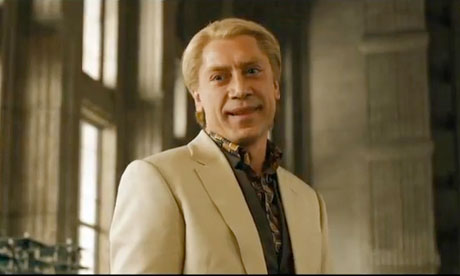
being typecast as the villain is working for Mr. Bardem

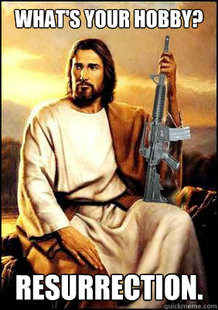
Meanwhile the war at home is raging, as the supposed incompetence of MI6 is called into question by top brass of Number 10: is there a need for 00 agents in this modern world? The analogy works to directly question the audience: is there a place for Bond in 2012? The rest of the film provides a succinct and booming "YES MUM." Skyfall is a stunning mix of action, witty dialogue, and a few gadgets (the ejector seat is mocked, as well as the exploding pen) that perfectly blends old with new; highlighting the need for balance. It should be considered the archetype for future Bonds, and the benchmark for the past. It is, indeed, a resurrection.  

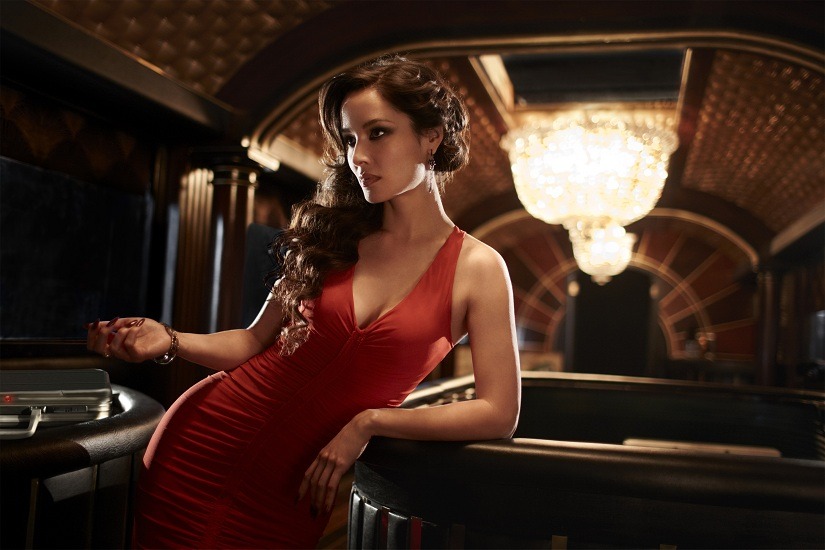
not a half-bad Bond girl, either

47/50 STATES

Monday, 8 October 2012

REVIEW - LOOPER

Time travel films are always hotly anticipated. Something all of us wish was invented, it's usually a joy to see our childish hopes and dreams played out infront of us on the big screen. Personally I'd go back to May 19th and re-watch the Drogba penalty with less nerves, make a lot of money on accumulators and go into business with Roman Abramovic. However, in Looper  we see time travel being used for slightly more dangerous means: assassinations. It's 2044 in the grand ol' USA (more specifically, Kansas) and we're promptly told by Joseph Gordon-Levitt that time travel has not been invented yet, but in 30 years it will be...

UNBELIEVABLE, JEFF

JEFF DANIELS has been sent back from 2074 to run things - establishing a criminal network that runs the city. He employs JGL's character, young Joe, as a LOOPER. His job is to be in a certain place at a certain time, and kill whoever has been sent back from the future for a hell of a lot of silver. Trick is though, one day you will come face to face with yourself in the field - a mind fuck to say the least, and then you're supposed to kill your old self, termed: "closing the loop". For some reason, loops are being closed on a much more frequent basis. And surprise, surprise, it's not long before JGL comes face to face with Bruce Willis kneeling in front of him. A questionable casting perhaps, and in the moment that JGL is pondering how he became John McClane, the old Joe springs into action and escapes. Failing to close a loop is punishable by death, and so now there's Jeff Daniels chasing young Joe, chasing old Joe.

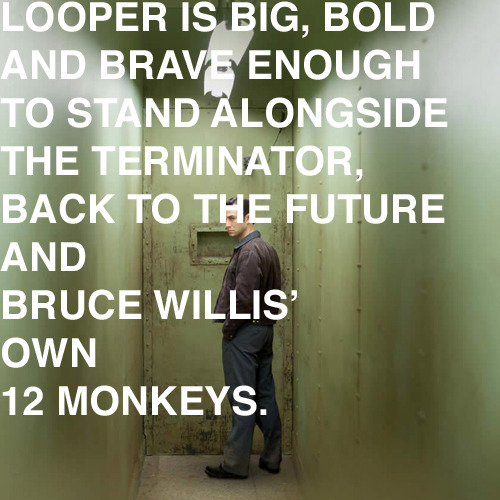
my god I want this poster

The greatest part about Looper is that it's incredibly simple in its explanation of how things in the present affect the future. Young Joe, for example, scars his arm to write "Beatrix" in order to get old Joe's attention for a meet at their favourite restaurant. The latter then informs young Joe that there's another waitress who works on weekends called "Jen" that would have been a better choice; but with age comes wisdom, aye? They talk. And young Joe learns that someone called the "Rainmaker" is closing all the loops whilst tearing shit up in a police state America 30 years later - it is, according to old Joe, therefore crucial they find and kill all of the three possible "Rainmakers"; who are nowt but a toddler in 2044. 

some questionable face SFX

All of this polarises the two Joes, who have differing opinions on child murder. The old Joe buggers off to make some regrettable decisions, whilst the young 'un uncovers the location of one of the possible "Rainmaker" children: a farm where Sara (Emily Blunt) is a badass mother/farmer/shotgun wielder who lets Joe help protect her child, Cid. As young Joe and Sara become close, he learns she is telekinetic - a genetic mutation that 10% of the population have, however most are unable to do much more than lift coins. Sara is slightly more proficient, as is her son. Meanwhile, old Joe is on a war path. Having lost his dear wife in the future, he is determined to do anything in his power to find the "Rainmaker" and stop his life from unravelling. Even going on one of the best-action directed rampages at Jeff Daniels' head quarters that you'll see this year.


think Kevin Smith would like to go back and un-direct that one, too

The director, Rian Johnson, really surprises in Looper  with some excellent cinematography and action editing, and at points feels more like a neo-noir than a time travel fiction. And a neo-noir/time travel film is a hard thing to do, least of all do well. But Johnson really excels in his first real shot at the big time. It's as if he's come back from the future as a master writer/director. Sure he's helped by a stellar cast, and one of the best JGL performances of his career, but the film is genius from start to finish. The dialogue is witty, the idea well executed, and the finale outstanding. We'll be watching Looper again, and again, and again, and again...

not quite as good as Groundhog Day, however.


43/50 STATES
Thursday, 27 September 2012

REVIEW - KILLING THEM SOFTLY

Set against the backdrop of the 2008 Presidential election, America and its inhabitants find themselves in a precarious position. With the red guy promising to return the US to its former "glory", while the blue guy promises "change". I've inverted both because Killing Them Softly is a film that sets out to debate  both these claims. The opening sequence is perfectly jarring in its juxtaposition of an Obama's speech with intermittent cutting between the decadence of a post-Katrina New Orleans - the direction America is headed is still up for debate. Meanwhile, there's some killing to do. 

and they say money can't buy happiness
We are introduced to Frankie and Russel, two low time crooks who have fallen on harder times - the poor fuck Russel is Australian. They're promptly hired by Squirrel, played by Vince Curatola (Johnny Fucking Sac! for all you Sopranos fans), to roll over a high stakes poker game run by Markie Trattman. Markie is played by Ray Liotta, who clearly has let himself go somewhat since the glory days of Goodfellas; he's a disheveled shell of a gangster, hitting his own poker games to make quick bucks. Thus the set up seems perfect: Frankie and Russel rob the game, and immediately the finger points back to Markie. A victimless crime! Except that would make for one helluva boring mob film.

tony soprano playing tony soprano

Introducing Jackie, who puts the P.I. in Pitt and quickly the little scheme is uncovered. He is contracted by a nameless suit (played by Richard Jenkins), whose identity remains a mystery throughout the film, to turn the mess into a body count. He's going to need a bit of help though, so in flys James Gandolfini (Tony Soprano) to lend a helping hand. Reunited the first time since The Mexican - another great Pitt movie if you have a spare few hours - Pitt and Soprano sit in a bar (a table I would do anything to pull up a chair to) and discuss business in what is arguably the best scene of the film. Turns out Soprano is becoming disillusioned with the recession, and proceeds to drink + hooker himself into early retirement, sadly ruining the promise of a Tony vs. Johnny Sac finale for the Sopranos fans. Jackie is well and truly alone.

Obama style?

Y'see, in an economy fueled by gambling - be that stock breaking or business deals gone wrong, the mob style mentality of an unidentified corporate America has plunged the country into dire circumstances. To reuse an earlier phrase: there is no victimless economy. Thus the poker game/entire plot of Killing Them Softly is simply one big, meaty, Soprano filled analogy for contemporary America. Hell, maybe Pitt is even supposed to represent Obama? Ok, maybe that was pushing the analogy one step too far, but the effort was there. The film is a really interesting semiotically, and one that allows various readings, of which I'm sure there will be many. It also treats its audience to some sublime editing and some of the prettiest cinematography you ever did see in a quasi-gangster film - some of the death scenes are anything but soft.


KILLING THEM SOFTLY WITH HIS SONG...

Killing them Softly has a lot to say, I'm just not sure it's fully articulate to its audience. There will be some questionable reactions, and some of the dialogue can seem a little preachy at times - however, it's America so perhaps we can chalk that one down to environment. It's stylish, has plenty of action, lots of favourite mafia stars, and a dollop of a message to send to its viewers. The United States is going through its toughest economic period since the 80s, and there needs to be more films made like this one. Ultimately in a recession, crime still pays; just not as well.

42/50 STATES